THE PORTABLE FUEL SYSTEM
We recently took on a job to resurrect/restore a friend's old truck. This truck is a 1980 Ford F100 pickup. It's a simple long bed truck with a 302 V8, nothing fancy but functional. The truck sat for several years and hasn't been kept up or anything in that whole time. Our friend wants us to more or less bring the truck back to life so it can at least be able to be used around town and for light duty work when need be.
Since I would pretty much have to bring this truck back to the compound to work on it I will have to haul this thing back on the trailer. Because of the layout of the land, it makes it very difficult to maneuver our long ass car trailer, towed behind our long ass truck, into the driveway to be able to be staged right in front of the truck to pull it on the trailer. This means the only real option is to try and get the truck running, even in a temporary capacity, long enough to drive up on the trailer in the street.
We attempted to do this by bringing a small can of fuel along with a length of fuel hose and a battery. The idea was going to be to remove the fuel line from the fuel pump and insert it in the can of gas so the pump can draw off the can of gas since the tank is full of old gas. Barring having to unstick the engine and the fact that our battery was garbage, we finally managed to get the truck to crank up but it would only run on starting spray. I determined the diaphragm in the fuel pump was probably shot and it wasn't drawing any fuel. Next thing I took a soap bottle that was empty and since the nozzle had a nipple similar to the inner diameter of the fuel hose, I was able to fill the bottle with gas and put the hose on the nipple of the bottle. I then put the other end of the fuel line on the port directly on the carburetor then held the bottle above the carb to feed the unit as the ole lady cranked the truck back up. I fed the carburetor from this small bottle, squeezing it lightly to keep the gas flowing until it ran out. After that debacle I told myself that things would've been a lot smoother if I had a self contained system that can be hooked right to a car's battery, have an onboard pump and enough fuel to run a carbureted engine for a little while to either test/tune the vehicle, test drive it or drive it up on a trailer. That is where my newest idea, The Portable Fuel System, was born.
I started things off with an old 1 gallon gas can that had no nozzle. This can is shaped in a way where it has the right surface to mount a canister fuel pump like the ones I typically get for universal use. That also brings me to the fuel pump, a canister unit with integrated fuel filter and 1/4" nipples. My plan is to attach the pump to the top of the gas can then put a hole from the input down into the can. The output side will be attached to a long fuel hose feeding directly into the vehicle's carburetor. The wires on the fuel pump will be connected to a two conductor cable that's a few feet long and terminates at a pair of alligator clamps that will connect to the vehicle's battery. It's a simple setup that will allow for the quick running of a vehicle regardless of the condition of the vehicle's fuel system.
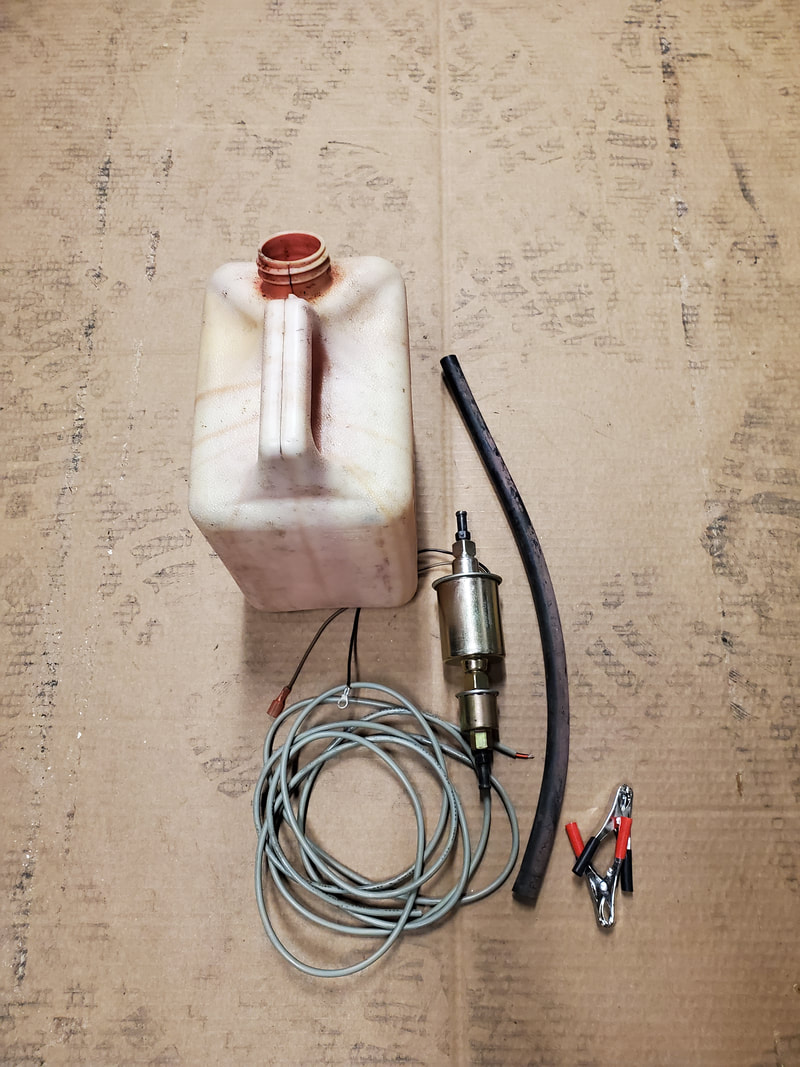
The parts for the Portable Fuel System laid out, minus a couple odds and ends like zip ties and the tools.
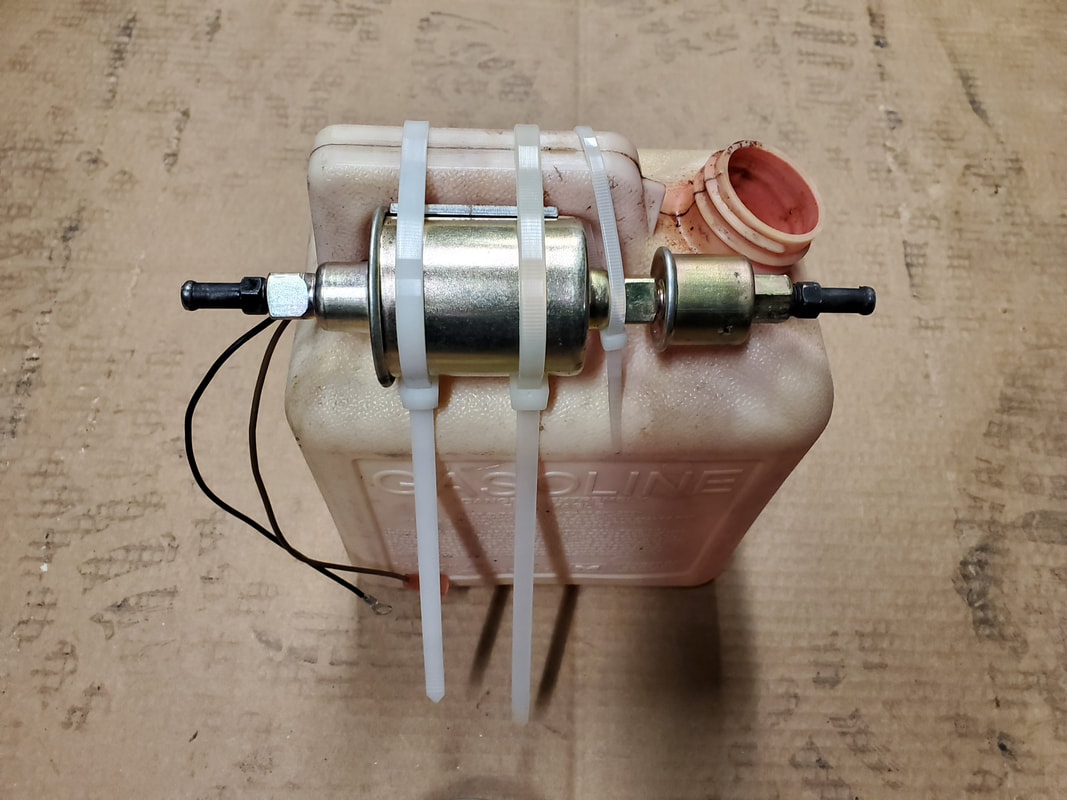
Fuel pump zip tied to top of fuel can with large zip ties with input of pump near nozzle port.
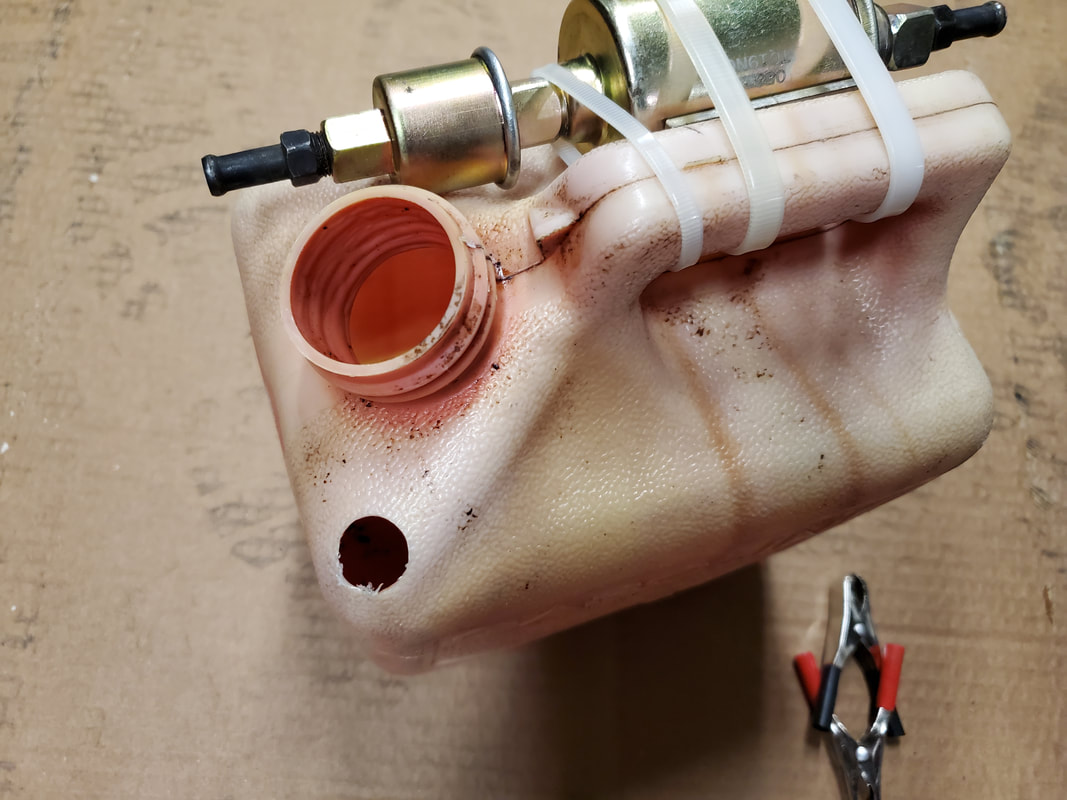
Large hole drilled in corner of gas can near nozzle port for fuel line to be routed through into the can from the pump's input.
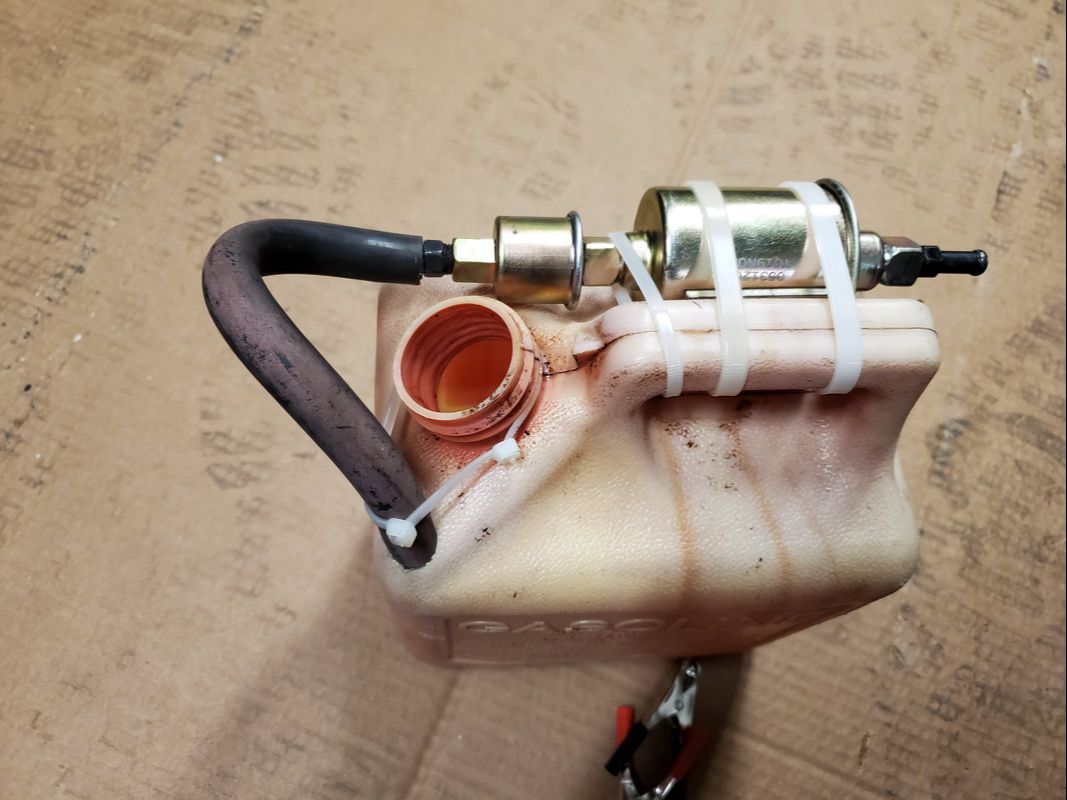
Fuel line routed through hole into fuel can and connected to input nipple on fuel pump. Fuel hose is flexible enough to allow for the sharp bend that is present with the hose.
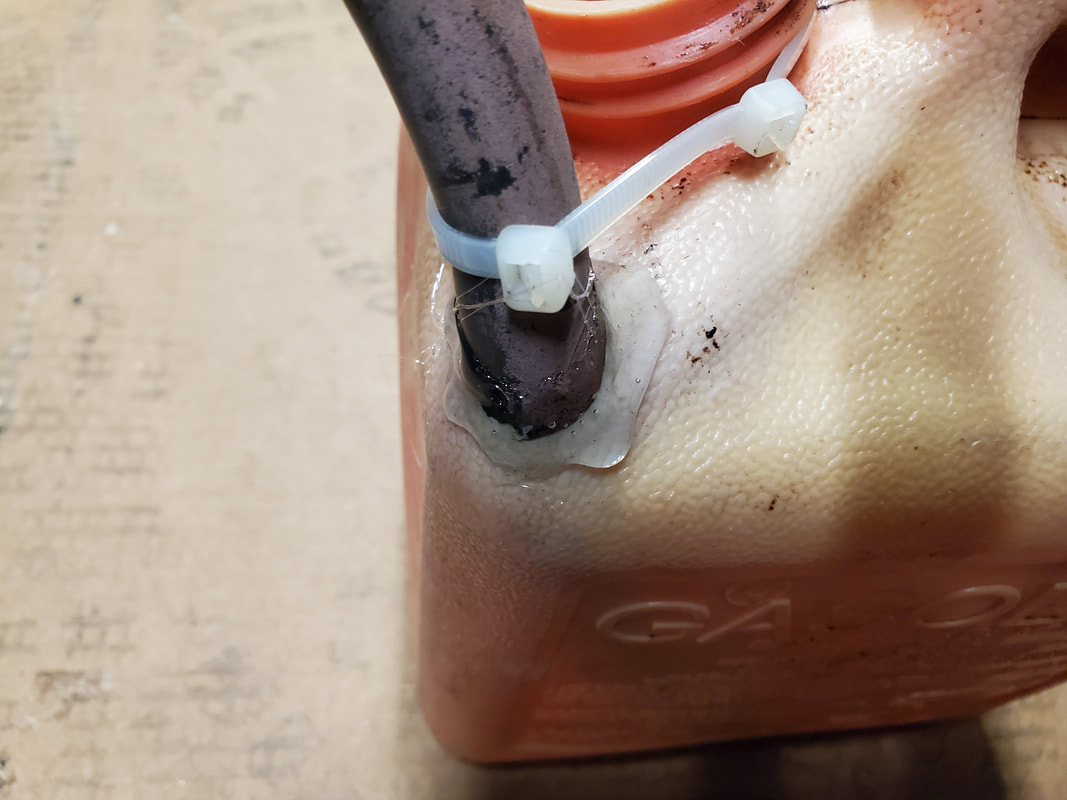
Fuel hose hot glued to hole in can to help seal the hose and hold it in place better than if it was standing alone. An extra zip tie is used to position the hose better to allow the end of the hose to almost touch the bottom of the fuel can.
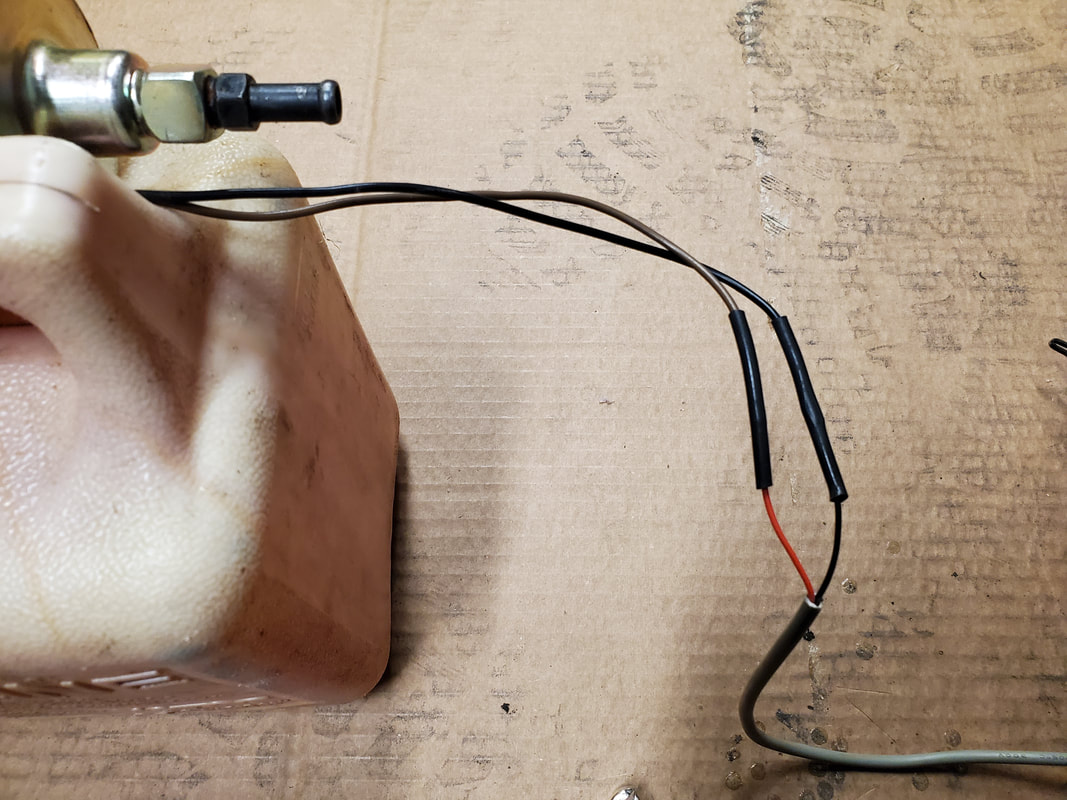
Two conductor cable with wires soldered to wires from fuel pump. Solder joints are covered with heat shrink tubing for added protection.
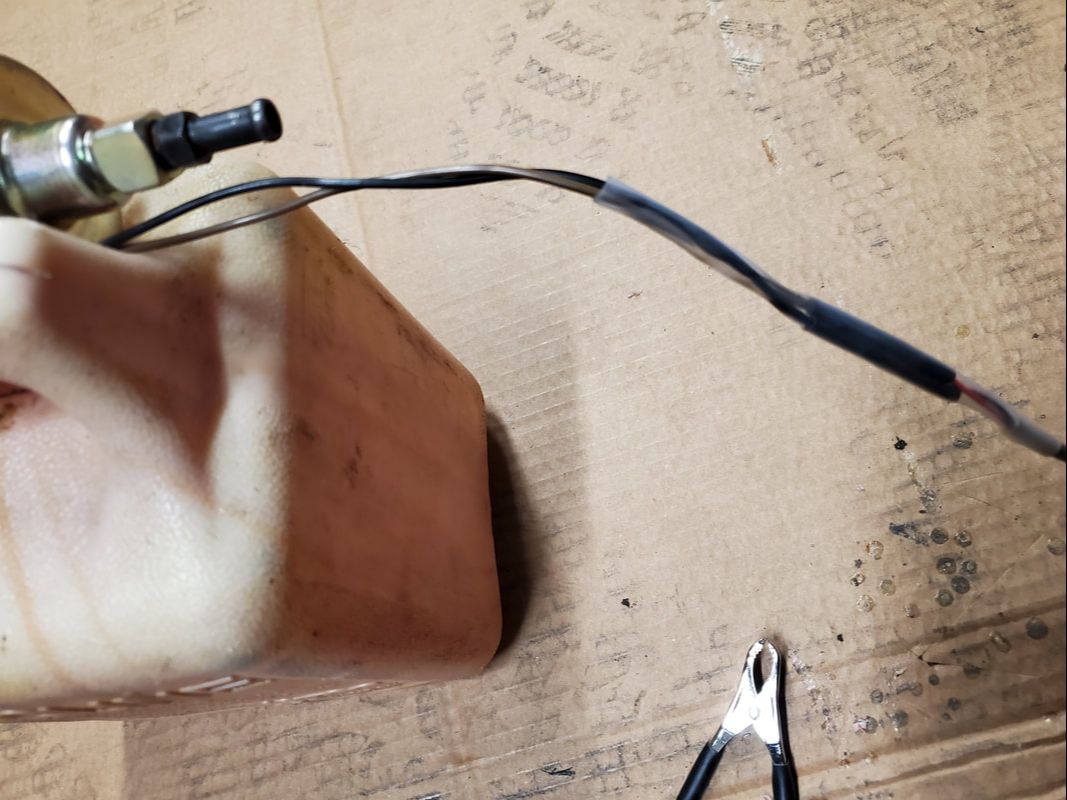
Added heat shrink tubing covering entire cable and fuel pump wire pair to ensure entire length of wiring is protected from damage when the device is in use.
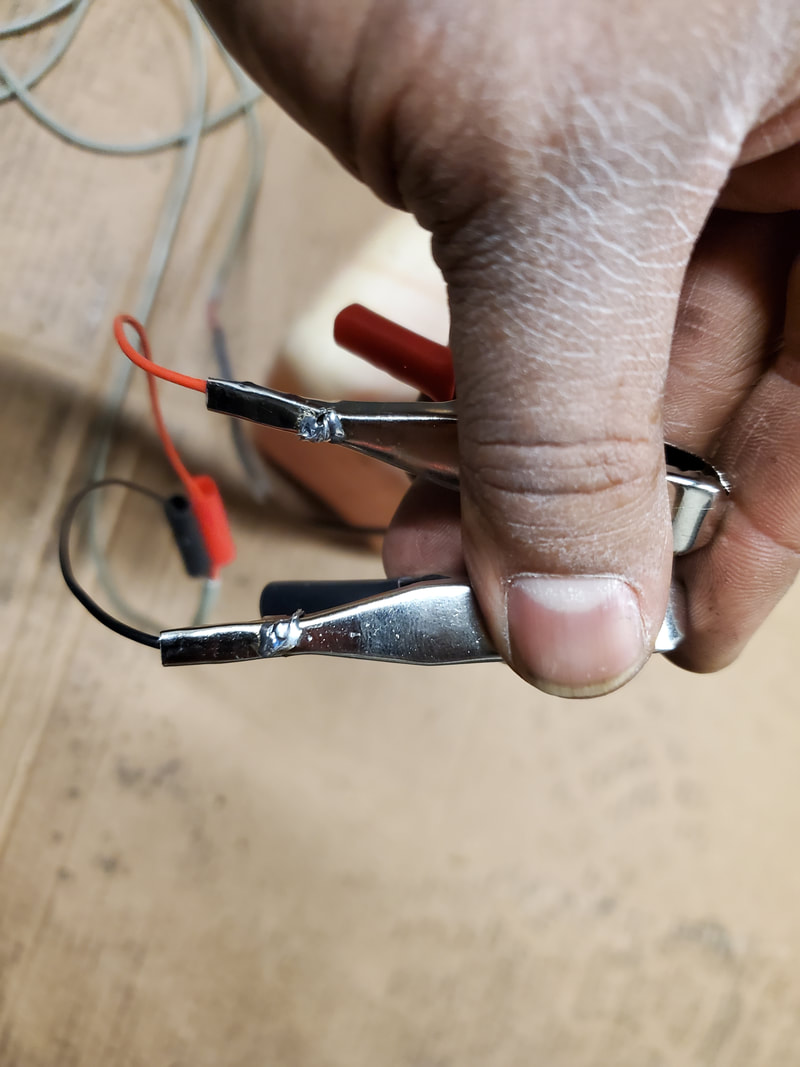
Alligator clamps with holes that I had to drill into in order to solder the wires to. Both clamps have sleeves to cover the clamp ends to protect the wire joints as well as jaws to clamp onto the wires.
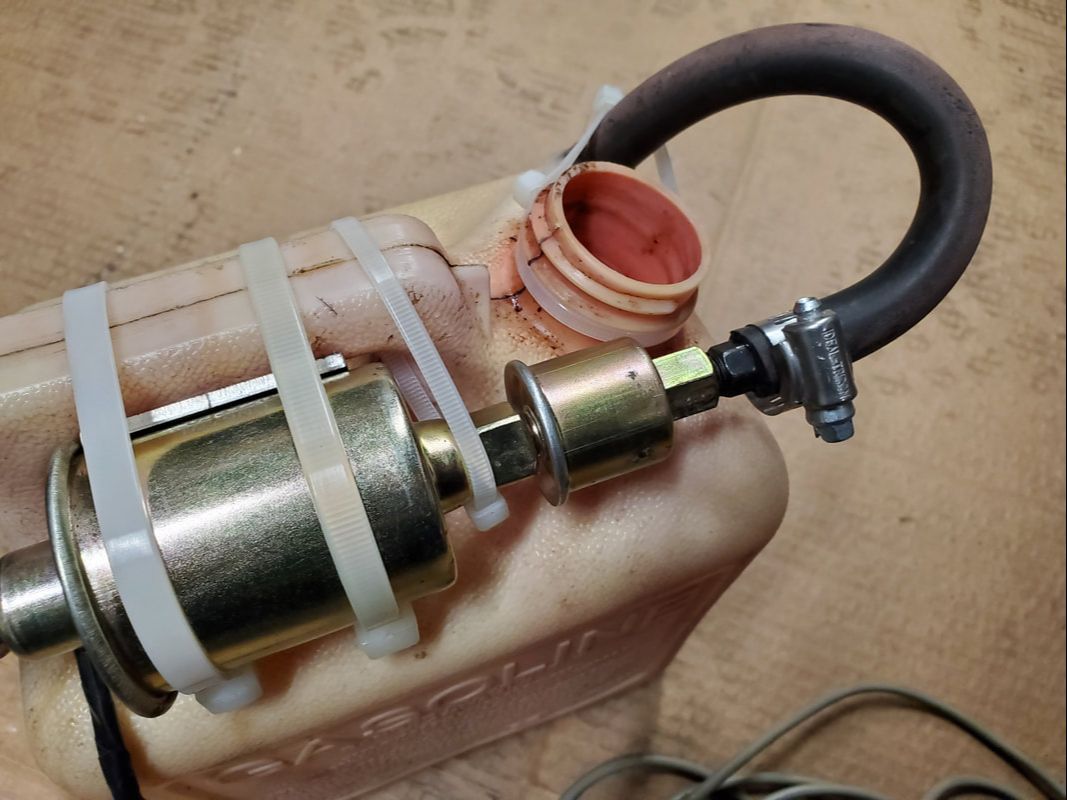
Worm clamp attached to the hose end on the fuel pump to seal the hose and ensure leak free operation.
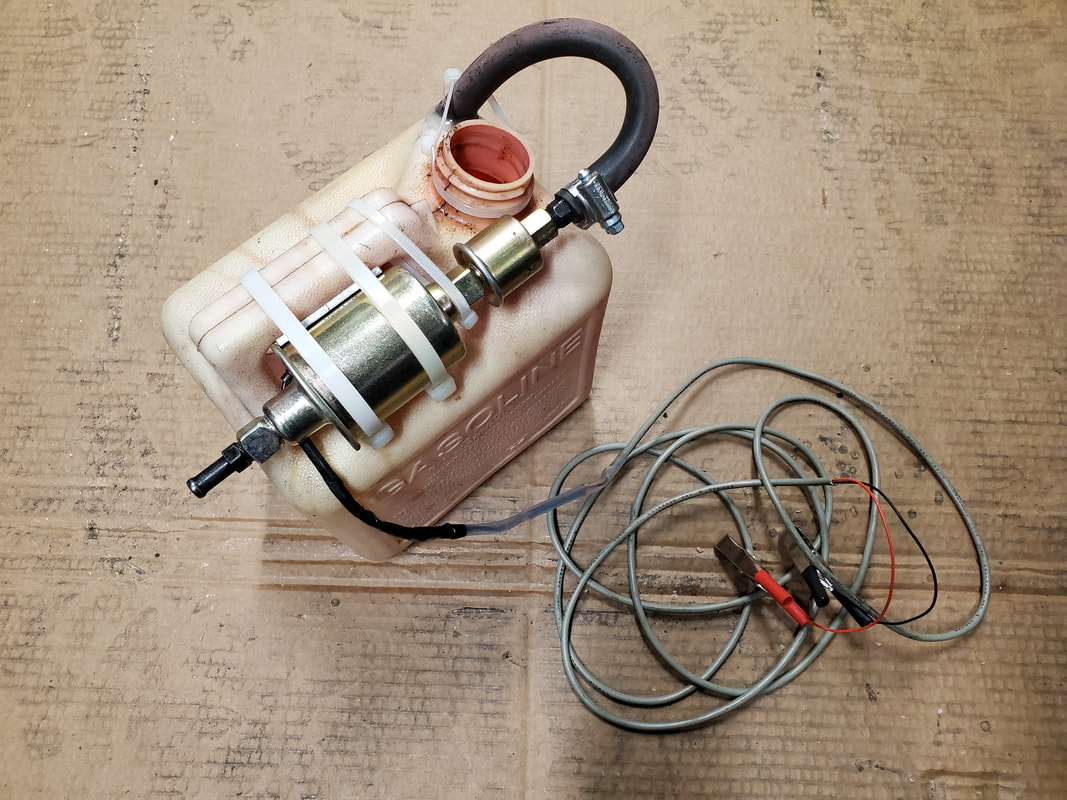
The completed unit with approximately 3ft of cable and no cap as of yet. I'll have to see if there's a generic cap that can be installed on the can, but whatever is used it will have to be able to vent to allow the pump to draw off the fuel in the can without creating a vacuum inside the can. Worst case I'll have to drill a pinhole in a cap that is used on this can.
As stated before, this device can be used to start up a vehicle with a questionable fuel system such as our truck that's been sitting for years, or even used for test running an engine that was just installed in a project build that doesn't have a fuel system installed yet. It can be used as an emergency fuel system to allow a car to limp home if its fuel system is compromised and field repairs are not possible. I feel this device will see plenty of use in our future automotive endeavors, making things a lot easier for us.
|
|
|
|
|
|
